Boreal Botany Field Notes
Learning to see the plants that shape the North
The landscape is never just a wall of green.
The Green Margin is a blog that I am using more as a field notebook, about learning to recognize plants as individuals: how they are built, how they reproduce, how they are related, and how they survive in northern environments.
These posts follow my continuing study of botany. I use each entry to translate lectures, scientific literature, laboratory work, and field observations into knowledge I can carry with me into the field.
It’s my hope that this will help form a change in perception, from simply looking at vegetation to noticing structures, patterns, adaptations, and relationships.
The Green Margin began as a way to revisit what I learned in systematic botany and make that knowledge last.
Writing forces me to do more than remember definitions. It requires me to connect ideas, explain them clearly, test my understanding, and recognize what I still need to learn.
Each field note explores a question such as:
What separates a root from an underground stem?
How can a flower’s structure help identify its family?
What does a phylogenetic tree actually tell us?
How do northern plants reproduce, disperse, and survive?
Why do people so often overlook the plants around them?
The goal is not to present myself as having all the answers. It is to document the process of becoming a more attentive observer and to invite others into that process.
Follow the Field Notes
Plant Form
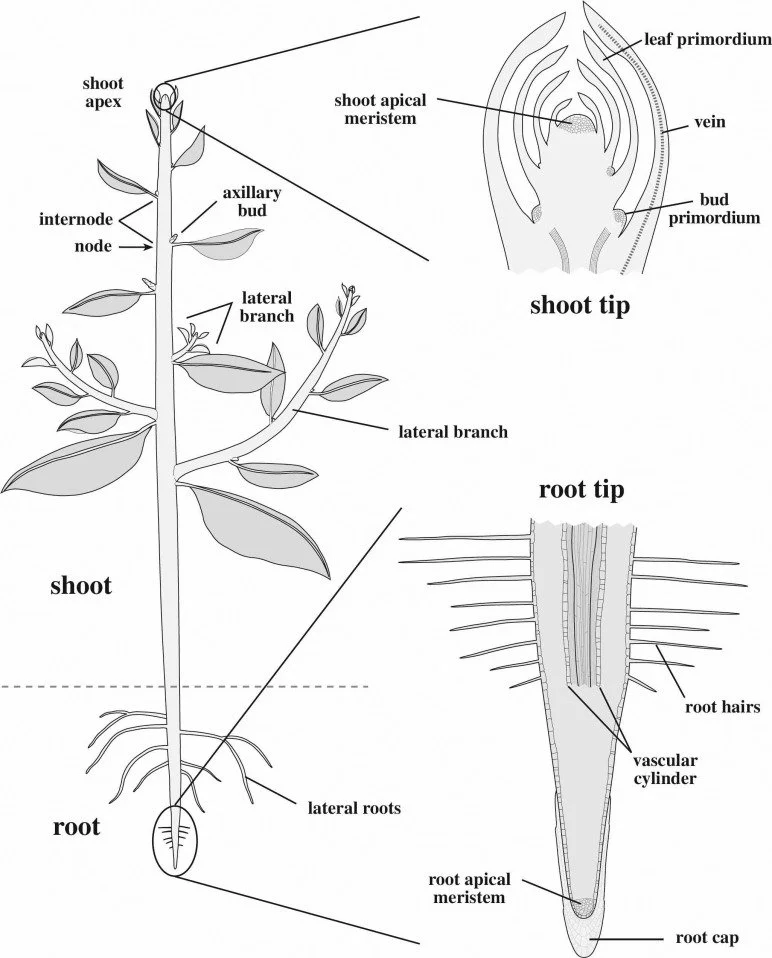
Learn the vocabulary of roots, stems, leaves, flowers, fruits, and other structures used to describe and identify plants.
Plant Relationships
Explore taxonomy, evolutionary history, phylogenetic trees, and the characteristics shared by major plant lineages and families.
Boreal Adaptations
Examine how plants respond to cold, fire, short growing seasons, wet soils, pollinators, and other conditions of northern life.
Field and Herbarium Practice
Follow the process of observing, sketching, identifying, collecting, documenting, and preserving botanical information.